Sundarban Tour as a Journey Through Mangroves, Wildlife, Light, Hidden Creeks, and Human Courage
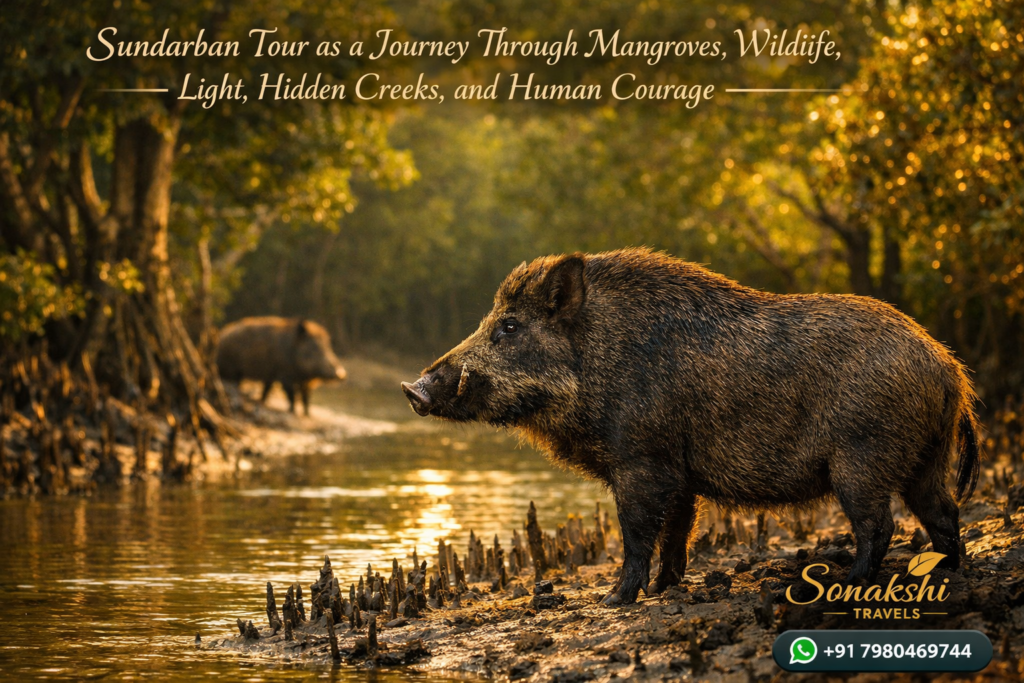
There are some places that can be understood in one quick look. The Sundarban is not one of them. This great tidal forest does not open its meaning at once. It asks people to move slowly, watch carefully, and think deeply. A Sundarban tour is not only about travel through a famous mangrove region. It is also about entering a living world where land, water, light, animals, and human life are tied together every single day.
What makes this landscape special is not only its size, beauty, or wildlife. Its real power comes from the way many truths meet in one place. The forest is wide, yet full of narrow hidden spaces. The rivers look calm, yet they are always changing with the tide. The evening light can make everything look soft and golden, yet behind that beauty there is struggle, caution, and survival. The people who live and work near the forest understand this balance better than anyone else. For them, the Sundarban is not a postcard. It is a real, demanding, and meaningful part of life.
That is why a thoughtful Sundarban travel experience should go beyond simple sightseeing. It should help a visitor see the forest as a complete system. The mangroves shape the waterways. The waterways shape movement. Wildlife appears only to those who learn patience. Human communities live beside the forest with respect, fear, and deep knowledge. When all these parts are seen together, the journey becomes richer and more truthful.
This is what makes the Sundarban memorable. It is not one moment, one view, or one dramatic sighting. It is the slow joining of many small understandings. The more carefully a person travels through this landscape, the more the delta begins to speak.
The Sundarban Is More Than a Forest
The first thing to understand is that the Sundarban is not just a forest in the common sense of the word. It is a vast meeting place of river, mud, tide, creek, island, and mangrove growth. Its geography is always active. Water enters and leaves. Riverbanks shift. Channels widen, narrow, and sometimes seem to disappear into the deeper green edge of the land. This changing form is one reason the area feels alive in a way few landscapes do.
To understand the region properly, one must see how physical geography and wilderness work together. The open river may give the first grand view, but that is only the beginning. The true character of the delta comes from how these waterways carry life through the mangrove system. A useful way to think about this is through the idea found in the world’s largest mangrove where geography meets wilderness. That idea matters because the Sundarban cannot be reduced to scenery alone. Its shape controls movement, survival, and even silence.
For travelers, this means a Sundarban tour package should never be viewed only as a route from one watchtower to another. The journey itself is the lesson. Every bend in the river shows how water governs the forest. Every muddy edge shows how fragile and strong this ecosystem is at the same time. The place teaches that geography is not a background feature. It is the main force that forms daily life here.
This wider understanding also adds value to the visitor’s experience. Instead of chasing only famous names or popular stops, the traveler begins to notice patterns. Why does the forest feel dense in one place and open in another? Why does one riverbank look fresh and unstable while another looks rooted and old? Why does the movement of the boat change the way the landscape is felt? These questions turn the trip into a deeper form of learning.
Wildlife in the Sundarban Rewards Patience, Not Speed
One of the biggest mistakes visitors make is expecting the Sundarban to behave like a zoo or a stage. This forest does not offer easy performance. Wildlife here belongs to the rhythm of the tide, the shelter of roots, the quiet of mudbanks, and the hidden lines of movement that people often miss. Animals do not appear because a tourist wants a good photograph. They appear when the conditions are right, and very often they remain unseen.
This is why patience is one of the most important values in the Sundarban. A person who travels with noise, hurry, and fixed expectation may return disappointed. But a person who learns to wait begins to see more. A bird resting in the distance, a movement near the roots, a shape along the bank, or a sign in the mud can become meaningful. The forest trains the eye slowly.
This deeper truth is reflected well in the patience of wildlife watching where waiting becomes discovery. The lesson is simple but powerful. In the Sundarban, stillness is not emptiness. It is preparation. Silence is not failure. It is part of the process of seeing.
For this reason, a good wildlife tour in Sundarban is built as much on observation as on movement. Guides, boatmen, and experienced forest workers often understand this well. They know that watching the waterline, the branches, and the mud can reveal more than restless searching. Such knowledge should be respected because it comes from real experience, not only from maps or brochure words.
This patient way of travel also changes the visitor. It creates a different relationship with nature. Instead of trying to control the experience, the traveler begins to accept uncertainty. That acceptance opens the mind. It makes each sighting more valuable because nothing feels forced. The forest gives what it chooses to give, and that is part of its dignity.
Hidden Creeks Reveal the Intimate Side of the Delta
Large rivers give scale to the Sundarban, but hidden creeks give it mystery. These narrow waterways are among the most striking parts of the landscape because they bring the traveler close to the inner structure of the mangrove world. In such places, the forest no longer sits far away on the horizon. It comes close on both sides. The water path becomes tighter. The atmosphere changes. Sound becomes softer, and attention becomes sharper.
These smaller channels often create the strongest feeling of entering the real heart of the delta. They show how the Sundarban is not only broad and open, but also layered and secretive. The journey becomes less about covering distance and more about entering depth. Even the movement of the boat feels different in these spaces. One does not rush through them. One passes through them with care.
This idea can be felt through a Sundarban tour into hidden creeks where narrow waterways reveal secrets. The word “secret” is important here, not because the forest hides fantasy, but because it does not reveal itself fully to casual attention. Its beauty and meaning are often held in these quieter passages.
A Sundarban private tour can especially benefit from this slower creek-based experience because it allows more room for attention and quiet movement. In such settings, the traveler becomes more aware of roots gripping the mud, reflected light on the water, and the feeling of being inside a place that remains larger than human control. That sense of humility is one of the greatest gifts of the delta.
Evening Light Changes the Meaning of the Landscape
Light is not a small detail in the Sundarban. It changes the whole emotional meaning of the landscape. Morning light may show freshness and clarity, but evening light gives the forest a different kind of truth. As the day moves toward sunset, the water begins to hold softer colour. Mudbanks lose their hard edges. Mangrove lines begin to glow. What looked ordinary in full daylight can become quiet, deep, and unforgettable.
The golden hours in the delta matter because they reveal how beauty in the Sundarban is often linked to time, not only place. A river is not the same river in every hour. A forest edge is not the same forest edge under every sky. This is one reason thoughtful travelers often remember evening moments so strongly. The change in light brings out calm, reflection, and a strange sense of distance.
This mood is captured through the delta turning golden under evening light over tidal water. That image is powerful because it shows the Sundarban not only as a place of ecology and wildlife, but also as a place of atmosphere. The emotional side of travel matters, and in this region it often arrives through light.
For visitors, these evening hours can become the moment when the journey feels complete. After a day of movement, watching, and learning, the soft golden sky over the tidal world brings many impressions together. The open water, the low forest line, the stillness of the boat, and the slow fall of light create a sense of peace that is hard to describe but easy to remember.
This is also why good travel writing about the region should not focus only on action. A strong Sundarban tourism narrative must include mood, light, and silence. These elements are not extra decoration. They are central to the visitor’s experience. They help explain why people return from the Sundarban with memories that feel deeper than ordinary sightseeing memories.
The Human Story of the Forest Is Essential
No honest account of the Sundarban is complete without the people whose lives are linked to the forest. Travel content often gives too much space to scenery and too little space to human courage. Yet in the Sundarban, the human story is one of the most important parts of the whole landscape. The people living near the delta do not know the forest only as beauty. They know it through work, risk, faith, and need.
Among the strongest examples of this are honey collectors, whose lives reflect both the richness and the danger of the region. Their work reminds us that the forest is not only watched from a boat by visitors. It is entered by people whose livelihoods depend on skill, timing, and bravery. Their knowledge is practical, inherited, and shaped by daily contact with uncertainty.
This theme becomes especially meaningful through the lives of honey collectors whose forest work is shaped by risk. This is not a side note to the Sundarban story. It is a central truth. The forest is beautiful, but it is also demanding. It gives, but it also tests. The communities around it live inside that balance.
For travelers, learning about such lives adds moral depth to the journey. It prevents the trip from becoming shallow consumption of beauty. It helps visitors understand that the Sundarban is also a human landscape, where labour, memory, and belief have real place. Respect for local people should therefore be part of every responsible Sundarban tour.
This human dimension also strengthens the thematic unity of the region. The geography shapes the waterways. The waterways shape wildlife movement. The forest demands patience from both animals and people. The evening light may soften the view, but it does not erase the hard truth of forest work. When all these levels are seen together, the Sundarban becomes more than a destination. It becomes a living relationship between nature and human endurance.
Why the Best Sundarban Experience Is a Slow and Thoughtful One
When these themes are brought together, a clear insight appears. The best way to experience the Sundarban is not through rush, noise, or checklist thinking. It is through slowness, attention, and respect. This is true because the delta reveals itself in layers. First comes the scale of the mangrove world. Then comes the detail of creeks and river edges. Then comes the discipline of patient wildlife watching. Then comes the emotional power of evening light. Finally, there comes the understanding that human life here is deeply connected with risk and resilience.
A strong Sundarban travel guide should therefore help people prepare for this kind of journey. It should encourage realistic expectations. It should explain that wildlife may not appear on demand. It should teach that landscape itself is part of the experience. It should invite travelers to notice creeks, tides, roots, and local stories, not only famous animal names. In simple words, it should help people see more by asking them to expect less performance and more truth.
In the end, the Sundarban leaves a strong impression because it brings together many kinds of wonder. It is vast, yet intimate. Quiet, yet full of life. Beautiful, yet marked by hardship. Mysterious, yet real. A traveler who enters this world with patience will return with a deeper understanding not only of the forest, but also of the way nature, time, and human courage can exist side by side.
The true gift of the journey is not just that one has seen the Sundarban. It is that one has learned how to read it. And once that reading begins, the mangrove delta is no longer only a place on a map. It becomes a lasting experience of nature, silence, risk, beauty, and discovery.